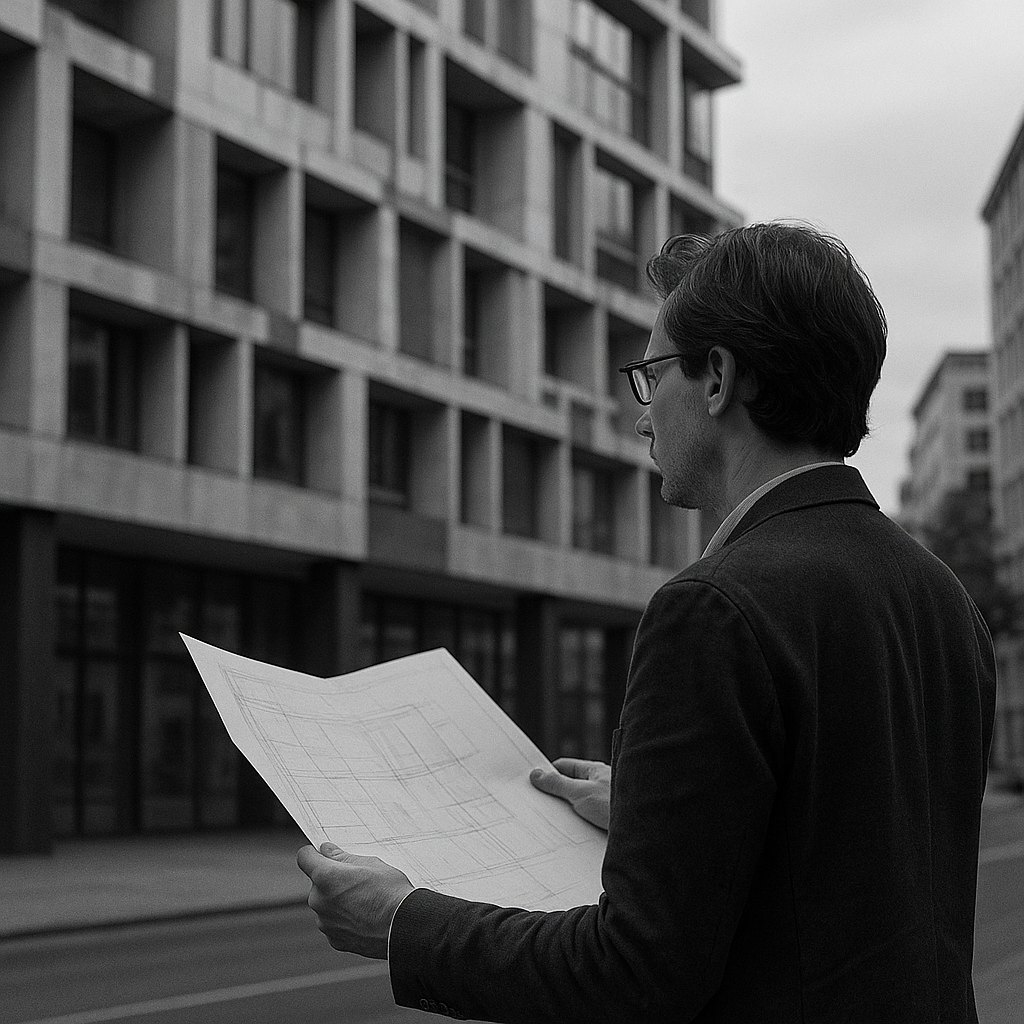
Architecture is more than the pretty images we see in magazines; it is an intellectual endeavor that requires “reading” rather than merely seeing. The famed architect Peter Eisenman emphasizes that architects must discern the intention and reasoning behind a design, not focus solely on its visual impact [1]. In practical terms, this means evaluating how well the concept of a building aligns with its form. When a designer’s intent and the building’s appearance are cohesive, we can judge it within a fair, consistent framework of values [2]. If they are misaligned – for example, a flashy form with no clear purpose – it becomes difficult to say why that work is good or bad architecture.
The practice of “reading” architecture involves looking at buildings analytically: understanding the choices, historical references, and logic that underlie the aesthetic.
This approach moves beyond surface appreciation. A building might be visually striking, but without grasping the ideas it embodies, one cannot truly evaluate its architectural quality. By training ourselves to read architecture, we recognize that a bold façade or unusual shape is not an end in itself; it is the physical manifestation of deeper concepts or problems the architect is addressing. For instance, a seemingly simple brick façade might encode a complex response to local context or historical styles, which only becomes apparent when examined with an informed eye.
Historically, architects have often been revered as artists or master builders, but their true role includes being interpreters of culture and ideas. A purely visual assessment – the
“seeing” – might lead us to praise a building just for being novel or photogenic. However, as one questions the why behind the design, we shift into “reading” mode and often discover the design’s intellectual merit or lack thereof. It’s akin to the difference between watching a film purely for spectacle versus analyzing its narrative and themes. A blockbuster action movie might dazzle the eyes, but a closer read could reveal a shallow story. Likewise, an avant-garde building that turns heads might, upon reading, reveal either brilliant reasoning or mere visual gimmickry.
Crucially, adopting this critical reading approach establishes a common language for discussing architecture’s value. It allows architects and the public to move beyond personal taste. Instead of saying “I like this building because it looks cool,” one can articulate why it succeeds or fails within a logical framework – for example, how its form facilitates social interaction, or how it cleverly interprets a traditional type. This is important because architecture, unlike isolated art, shapes public space and lives; thus it must be understood and debated collectively. As Sunwoo Kim notes, without common values and a shared way to discuss design, we cannot have meaningful debate about what is “good” or “bad” architecture[3]. Reading architecture for intent and coherence helps establish those common values.
In sum, “reading” architecture means engaging with buildings on an intellectual level – examining the intent, context, and logic behind forms. It elevates the discourse from “wow, that looks cool” to a richer conversation about ideas and society. By reading rather than just seeing, architects and observers alike ensure that visually impressive designs are also conceptually robust. This critical, interpretive approach ultimately leads to better architecture, because buildings are conceived and evaluated within a logical and intellectually consistent framework[4], not just by aesthetic whim. It is a shift that reinforces architecture’s unique value as a form of knowledge, not merely a visual art.
Leave a Reply